overhead crane single girder
overhead crane single girder
Expert single girder overhead crane solutions in Ahmedabad. Hindustan Cranes offers reliable, efficient, and safe lifting equipment for diverse industrial needs
What is a Single Girder Overhead Crane? — Overview
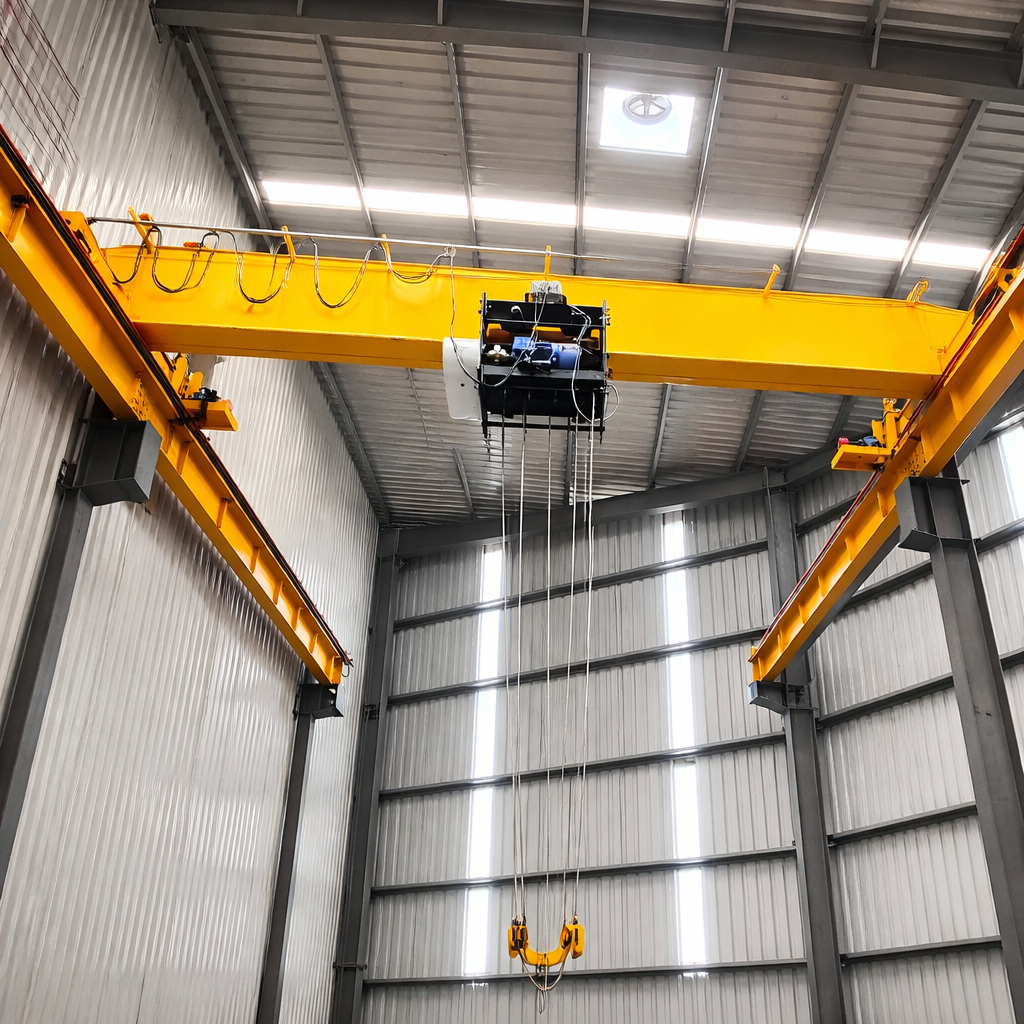
A single girder overhead crane, often referred to as an EOT (Electric Overhead Traveling) crane, is a type of industrial crane characterized by a single main bridge beam (girder) that supports the hoist and trolley. This bridge spans the width of the workspace and travels along elevated runways, typically mounted on support columns. The hoist, which carries the lifting mechanism (like a hook or grab), moves along the bottom flange of the single girder. This design allows for lifting and moving heavy loads precisely across the entire rectangular area beneath the crane.
Key Features and Technical Specifications
- Single Main Girder: Constructed from robust steel, this beam forms the primary load-bearing structure.
- Hoist and Trolley Assembly: A compact unit that travels along the girder, carrying the lifting hook.
- End Carriages: Located at each end of the girder, these house the wheels that allow the crane to travel along the runway.
- Variable Lifting Capacities: Available in a wide range of capacities, from a few tons to over 50 tons, depending on application needs.
- Span Lengths: Customizable to fit the specific dimensions of the workspace, from small workshops to large factory floors.
- Control Systems: Options include pendant controls, radio remote controls, or cabin controls for operator convenience and safety.
- Duty Class Ratings: Designed for various operational intensities, from light-duty intermittent use to heavy-duty continuous operation.
- Safety Features: Incorporates limit switches, overload protection, emergency stops, and robust braking systems.
Industrial Applications and Use Cases
- Manufacturing Plants: Moving raw materials, work-in-progress, and finished goods between workstations.
- Warehousing and Logistics: Loading and unloading trucks, stacking pallets, and organizing inventory.
- Fabrication Shops: Handling large metal sheets, structural components, and assembled parts during welding and assembly.
- Automotive Industry: Lifting engines, chassis components, and assembled vehicles on production lines.
- Foundries and Metal Processing: Moving molten metal ladles (with appropriate modifications) and heavy metal ingots.
- Construction Sites: Lifting pre-fabricated components, steel structures, and heavy equipment.
- Power Plants: Maintenance and installation of heavy machinery and components.
- Shipyards: Assembling large ship sections and moving heavy marine equipment.
How to Choose the Right Single Girder Overhead Crane
Selecting the appropriate single girder overhead crane involves careful consideration of several factors to ensure it meets your operational demands safely and efficiently.
- Determine Lifting Capacity: Accurately assess the maximum weight of the loads you will be lifting, including the weight of any lifting accessories (e.g., slings, magnets).
- Define Span and Height Requirements: Measure the exact dimensions of your workspace and the required lifting height to ensure full coverage and clearance.
- Assess Duty Cycle: Consider how frequently and for how long the crane will be in operation daily to select the correct duty class rating.
- Evaluate Power Supply and Infrastructure: Ensure your facility can support the electrical requirements and structural integrity for crane runways.
- Consider Control Method: Decide whether a pendant, radio remote, or cabin control system best suits your operational workflow and safety protocols.
- Verify Safety Standards and Certifications: Look for cranes that comply with relevant national and international safety standards (e.g., IS, ISO).
- Investigate Manufacturer's Experience and Support: Choose a reputable manufacturer with a proven track record, offering installation, training, and after-sales service.
- Explore Customization Options: Determine if your application requires specific features or modifications beyond standard configurations.
Quality Standards and Compliance
For any industrial lifting equipment, adherence to stringent quality standards and regulatory compliance is non-negotiable. In India, standards set by the Bureau of Indian Standards (BIS) are paramount. Manufacturers should ensure their single girder overhead cranes meet relevant IS standards for design, manufacturing, and testing. International standards like ISO certifications (e.g., ISO 9001 for quality management) also indicate a commitment to consistent quality and reliable processes. Buyers should verify that the crane's design, materials, welding procedures, electrical components, and safety features comply with these established benchmarks. This due diligence ensures the equipment is safe, durable, and performs as expected over its operational life.
Why Hindustan Cranes' Experience and Capability Matters
With over 15 years of dedicated experience in designing and manufacturing industrial lifting solutions, Hindustan Cranes & Hoist Co. has established a strong foundation of expertise. Our team comprises seasoned engineers and technicians who possess deep knowledge of material handling challenges across various industries. We pride ourselves on our meticulous manufacturing processes, utilizing high-quality materials and adhering to strict quality control measures at every stage. This commitment ensures that each single girder overhead crane leaving our facility is built for reliability, safety, and optimal performance.
Our capability extends to offering highly customized solutions, understanding that off-the-shelf products don't always fit unique operational needs. We work closely with clients in Ahmedabad and beyond to engineer cranes that precisely match their specific requirements. Furthermore, our robust after-sales support, including installation assistance and maintenance services, underscores our dedication to providing comprehensive and trustworthy lifting solutions that contribute to our clients' long-term success.
Installation, Maintenance, and Care Tips
Proper installation is the first step to ensuring the longevity and safe operation of your single girder overhead crane. It should always be performed by qualified technicians who understand the system's mechanics and safety protocols. Regular preventive maintenance is crucial; this includes daily visual inspections by the operator for any obvious damage or wear, and scheduled periodic inspections by certified maintenance personnel.
Key maintenance tasks involve checking the hoist rope for fraying or damage, inspecting brake systems for proper function, lubricating moving parts, verifying electrical connections, and testing limit switches and overload protection devices. Keeping the crane clean, especially the electrical panels and moving parts, also prevents premature wear and potential malfunctions. Following the manufacturer's recommended maintenance schedule will significantly reduce the risk of unexpected breakdowns and ensure the crane operates efficiently and safely.
Frequently Asked Questions
Single girder cranes are generally more cost-effective and lighter in construction, making them ideal for lighter to medium-duty applications where the full lifting height and load capacity of a double girder are not required. They also require less structural support.
The lifting capacity is determined by the design specifications of the main girder, the hoist's capacity, and the overall structural integrity of the crane system, all calculated based on the intended maximum load.
Yes, single girder overhead cranes can be designed for outdoor use with appropriate weatherproofing for electrical components, robust paint finishes, and protection against environmental factors.
With proper installation, regular maintenance, and operation within its designed duty cycle, a single girder overhead crane can have a lifespan of 20 to 30 years or more.
Essential safety features include overload protection, emergency stop buttons, limit switches for hoist and travel, robust braking systems, and audible/visual warnings.
Hindustan Cranes adheres to strict quality control measures throughout the design and manufacturing process, uses high-grade materials, employs experienced engineers, and ensures compliance with relevant Indian Standards (IS) and ISO certifications.
Conclusion
For industries in Ahmedabad seeking efficient, reliable, and safe material handling solutions, a single girder overhead crane represents a smart investment. The key lies in partnering with an experienced and capable manufacturer like Hindustan Cranes & Hoist Co. Our deep understanding of industrial needs, coupled with our commitment to quality engineering and customer support, ensures you receive a lifting solution tailored to your specific operational demands. By focusing on robust construction, adherence to safety standards, and providing ongoing support, we help businesses in Ahmedabad and across Gujarat enhance their productivity and operational efficiency.
Get In Touch
Hindustan Cranes & Hoist Co