
Gantry Crane Manufacturer
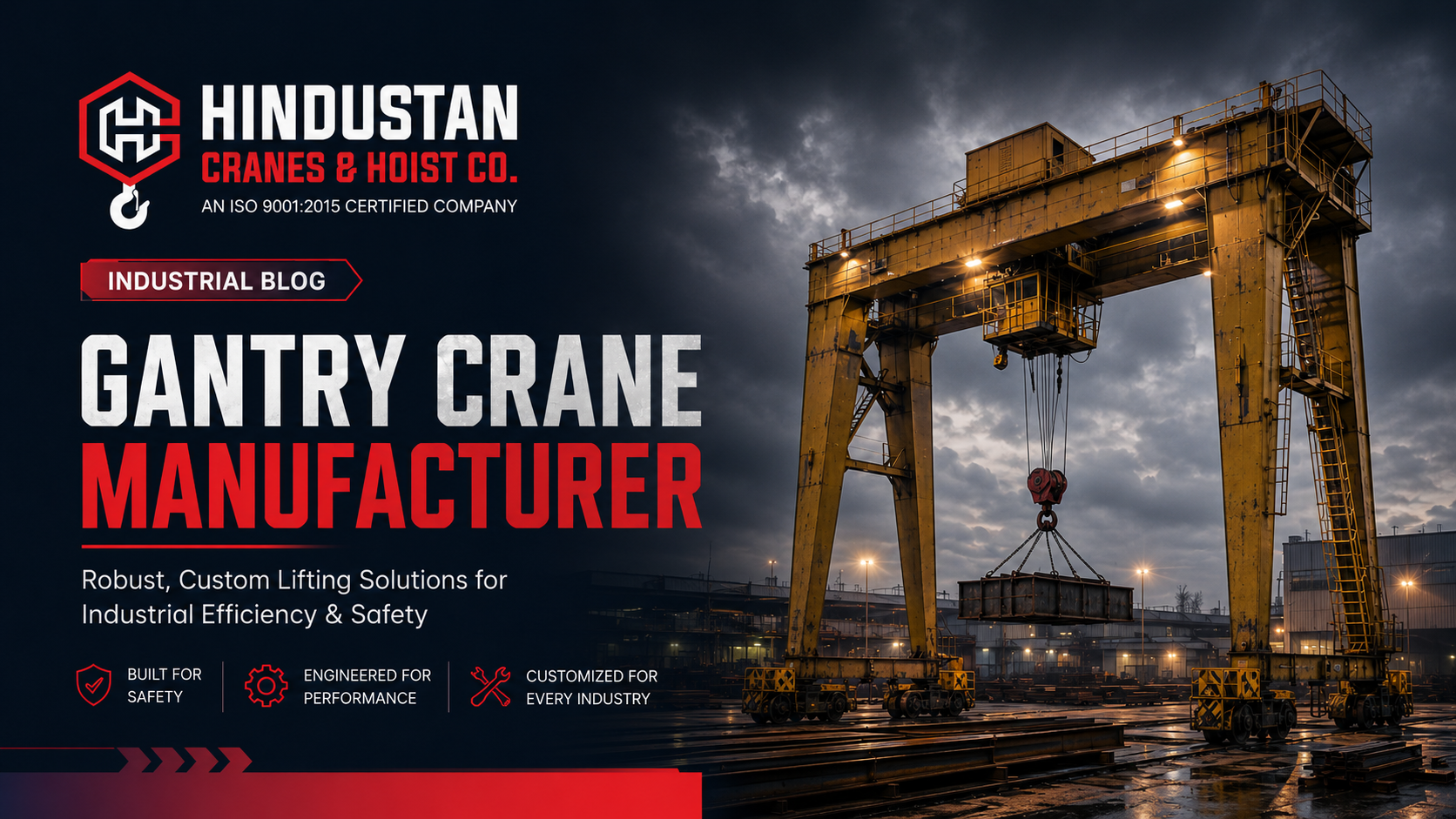
Gantry Crane Manufacturer
Expert gantry crane manufacturer in Ahmedabad. Hindustan Cranes offers robust, custom lifting solutions for industrial efficiency and safety.
What is a Gantry Crane? An Overview
A gantry crane is a type of industrial crane that utilizes a bridge supported by legs that move on wheels or along a track. Unlike overhead cranes that rely on runway beams attached to a building's structure, gantry cranes are self-supporting. The main components include the bridge (a horizontal beam), the trolley and hoist that move along the bridge to lift and transport loads, and the legs that provide vertical support. They are designed for lifting and moving heavy objects, often in open yards, assembly areas, or workshops where overhead runway installation is impractical or impossible.
Key Features and Technical Specifications
When evaluating gantry cranes, specific features and specifications are paramount for ensuring they meet operational demands. A reputable manufacturer will offer options that can be tailored to your exact needs.
- Lifting Capacity: Ranging from a few tons to several hundred tons, precisely matched to the heaviest loads.
- Span and Height: Customizable dimensions to cover the required work area and lift to the necessary elevation.
- Trolley and Hoist Type: Options include wire rope hoists, chain hoists, or specialized lifting attachments.
- Mobility: Options for wheeled bases (rubber tires, rail wheels) or fixed foundations.
- Duty Classification: Designed for specific operational cycles (e.g., light, medium, heavy, severe duty).
- Power Source: Typically electric, with options for diesel or manual operation in some configurations.
- Control System: Pendant control, radio remote control, or cabin control for operator convenience and safety.
- Safety Features: Overload protection, limit switches, emergency stops, and robust braking systems.
Industrial Applications and Use Cases
The versatility of gantry cranes makes them invaluable across a wide spectrum of industries, particularly within the active industrial zones of Ahmedabad.
- Shipyards and Ports: Loading and unloading cargo, moving heavy components for shipbuilding.
- Steel Fabrication: Lifting and positioning large steel structures, beams, and plates.
- Construction Sites: Moving pre-fabricated modules, heavy equipment, and construction materials.
- Manufacturing Plants: Assembling large machinery, moving raw materials, and finished goods within workshops or outdoor storage areas.
- Warehousing and Logistics: Efficiently stacking and retrieving goods in large open-air storage facilities.
- Railway Yards: Handling track components and maintenance equipment.
- Power Plants: Installation and maintenance of heavy equipment.
- Automotive Industry: Moving large vehicle components or finished vehicles on assembly lines.
How to Choose the Right Gantry Crane
Selecting the appropriate gantry crane is a critical decision that impacts operational efficiency, safety, and long-term costs. Consider these factors:
- Load Requirements: Accurately determine the maximum weight and dimensions of the items to be lifted.
- Work Area Dimensions: Measure the length, width, and height of the area the crane needs to cover and lift within.
- Operating Environment: Assess whether the crane will be used indoors, outdoors, or in harsh conditions (e.g., corrosive atmosphere, extreme temperatures).
- Frequency of Use: Consider the duty cycle required – how often and for how long the crane will operate.
- Mobility Needs: Decide if the crane needs to be moved frequently or if it will remain in a fixed location.
- Power Availability: Ensure a suitable power supply is accessible for electric models.
- Budgetary Constraints: Balance initial investment with long-term operational benefits and maintenance costs.
- Supplier Reputation and Support: Prioritize manufacturers with a proven track record, good customer service, and readily available spare parts and maintenance.
Quality Standards and Compliance
Adherence to recognized quality standards and compliance with safety regulations is non-negotiable when procuring industrial lifting equipment. Manufacturers like Hindustan Cranes & Hoist Co. ensure their products meet stringent industry benchmarks. Buyers should verify that the gantry cranes comply with relevant Indian Standards (IS), International Organization for Standardization (ISO) certifications, and any specific industry regulations applicable to their operations. This includes ensuring proper design calculations, material traceability, welding certifications, and thorough testing before delivery. Compliance guarantees not only safety but also the longevity and reliability of the equipment.
Why Hindustan Cranes' Experience and Capability Matter
With over 15 years of dedicated experience in designing and manufacturing industrial lifting solutions, Hindustan Cranes & Hoist Co. has established a strong reputation in Ahmedabad and beyond. Our manufacturing process is driven by a deep understanding of engineering principles and a commitment to quality. We employ a skilled team of engineers and technicians who bring extensive expertise to every project, ensuring that each gantry crane is built to precise specifications. Our robust quality control measures, from material selection to final inspection, guarantee that our equipment performs reliably and safely under demanding industrial conditions.
We pride ourselves on our ability to provide customized solutions, working closely with clients to understand their unique operational challenges. This collaborative approach, combined with our manufacturing capability and dedication to after-sales support, ensures that our clients receive lifting equipment that enhances their productivity and operational safety. Our focus is on delivering durable, efficient, and cost-effective gantry cranes that provide long-term value.
Installation, Maintenance, and Care Tips
Proper installation, regular maintenance, and diligent care are essential for maximizing the lifespan and performance of your gantry crane.
- Installation: Ensure installation is performed by qualified technicians who follow the manufacturer's guidelines and local safety regulations. Proper anchoring and alignment are critical for stability and safe operation.
- Pre-Operation Checks: Before each shift, conduct visual inspections of the crane structure, hoist, brakes, controls, and electrical components. Check for any loose parts or visible damage.
- Lubrication: Follow the recommended lubrication schedule for all moving parts, including wheels, gears, and hoist mechanisms, using the specified lubricants.
- Brake System: Regularly inspect and test the brake system to ensure it is functioning effectively. Worn brake pads or shoes should be replaced promptly.
- Electrical Systems: Keep electrical connections clean and secure. Inspect cables and wiring for any signs of wear or damage.
- Load Testing: Periodically perform load tests as per manufacturer recommendations and regulatory requirements to verify the crane's lifting capacity and structural integrity.
- Environmental Factors: Protect outdoor gantry cranes from extreme weather conditions. Consider protective covers or storage when not in use for extended periods.
- Record Keeping: Maintain a logbook of all inspections, maintenance activities, and repairs. This helps track the crane's history and identify potential issues early.
Frequently Asked Questions
The main advantage is their self-supporting structure, allowing them to be used in areas without existing building support or for outdoor applications, offering greater flexibility in placement and mobility.
Lifting capacity is determined by the design specifications, considering the strength of the bridge, legs, trolley, hoist, and the overall structural integrity to safely handle the intended maximum load.
Absolutely. Manufacturers like Hindustan Cranes specialize in custom gantry crane design, tailoring dimensions, lifting capacity, hoist type, and mobility features to precisely match unique operational requirements.
Standard safety features include overload protection devices, limit switches to prevent over-travel, emergency stop buttons, robust braking systems, and audible/visual warning signals.
With proper maintenance and regular servicing, a well-built gantry crane can have a lifespan of 20 to 30 years or even longer, depending on its duty classification and operating environment.
Routine maintenance includes regular inspections of structural components, electrical systems, brakes, and hoist mechanisms, along with proper lubrication of moving parts and periodic load testing.
Conclusion
For industries in Ahmedabad and across Gujarat requiring robust, flexible, and powerful lifting solutions, gantry cranes offer an exceptional answer. Their ability to operate in diverse environments, coupled with customizable configurations, makes them a vital asset for material handling. Choosing a gantry crane manufacturer with proven expertise, a commitment to quality, and a focus on client-specific needs is paramount. Hindustan Cranes & Hoist Co. stands ready to provide reliable, high-performance gantry cranes, backed by extensive experience and dedicated support, ensuring your operations lift heavier, work smarter, and achieve greater efficiency and safety.
Get In Touch
Hindustan Cranes & Hoist Co