EOT Overhead Cranes Manufacturer
EOT Overhead Cranes Manufacturer
Discover reliable EOT overhead cranes in Ahmedabad engineered for heavy-duty industrial lifting. Learn about features, applications, and choosing the right syst
Why This Matters in Ahmedabad
Ahmedabad stands as a significant industrial hub in India, with thriving sectors including manufacturing, automotive components, textiles, heavy engineering, and pharmaceuticals. These industries rely heavily on efficient material flow for their daily operations. As businesses expand and modernize, the demand for advanced lifting equipment like EOT overhead cranes grows, driven by the need to handle heavier loads, increase throughput, and adhere to stringent safety regulations. Local manufacturers play a crucial role in providing tailored solutions that meet these specific regional industrial requirements.
What Is An EOT Overhead Crane — Overview
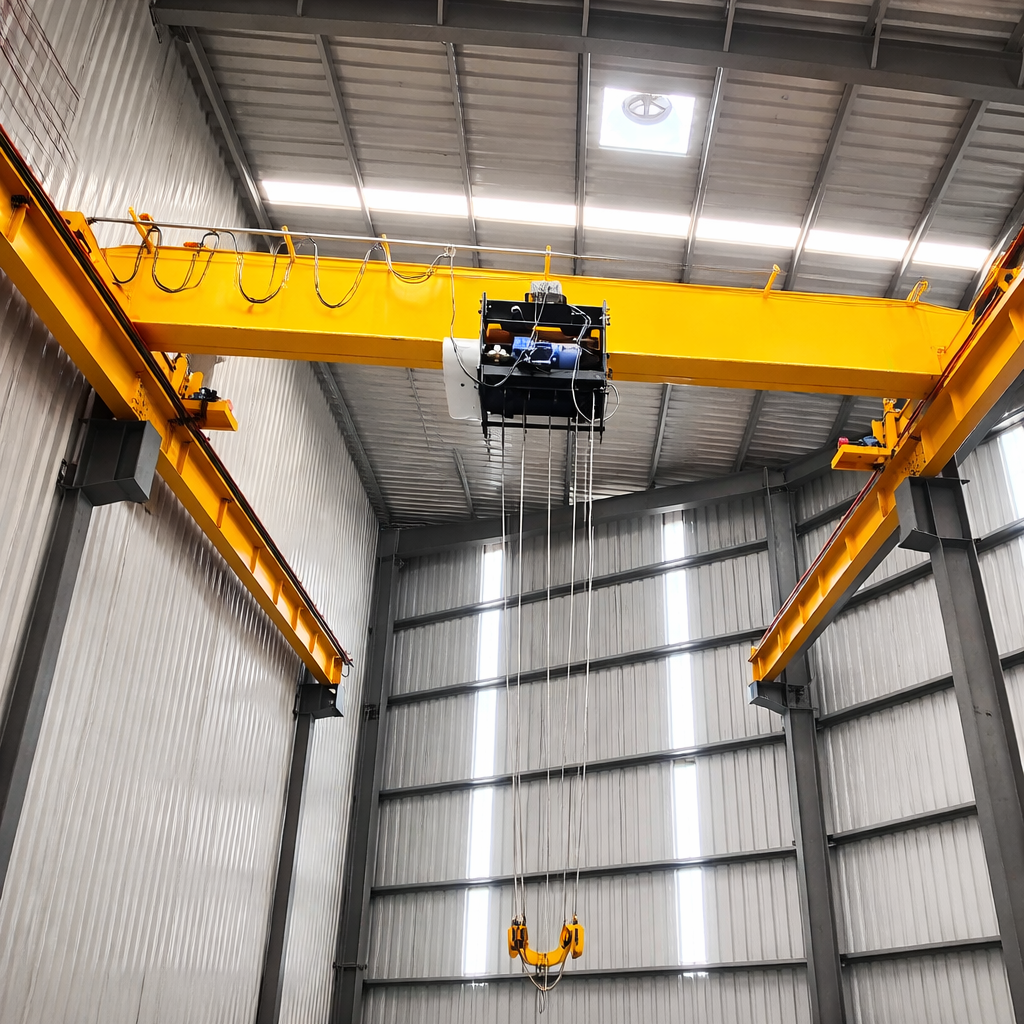
An Electric Overhead Traveling (EOT) crane is a type of overhead crane that utilizes electric power for all its movements. It consists of a bridge girder that spans the width of the building, supported by end carriages that travel along parallel runways. A hoist and trolley mechanism moves across the bridge girder, allowing for both vertical lifting and horizontal movement of loads within a rectangular area. EOT cranes are engineered for heavy-duty applications, providing precise and controlled material handling capabilities essential for various industrial environments.
Key Features and Technical Specifications
EOT overhead cranes are designed with specific features to ensure reliable and efficient operation in demanding industrial settings.
- Load Capacity: Available in a wide range, typically from 1 ton up to 200 tons, to suit diverse lifting requirements.
- Span Length: Customizable to match the width of the facility, ensuring comprehensive coverage of the working area.
- Lifting Height: Engineered for various hook heights, accommodating different building structures and operational needs.
- Control Systems: Options include pendant control for direct operation, or radio remote control for enhanced operator safety and flexibility.
- Safety Devices: Integrated with limit switches for hoist and travel, overload protection systems, and emergency stop buttons.
- Duty Classification: Designed according to FEM, ISO, or IS standards (e.g., M3, M4, M5, M6) to match the intensity and frequency of use.
- Variable Frequency Drives (VFDs): Often incorporated for smooth acceleration, deceleration, and precise positioning of loads, reducing mechanical stress.
- Robust Construction: Fabricated from high-grade steel, ensuring structural integrity and long-term durability under heavy loads.
Industrial Applications and Use Cases
EOT overhead cranes are versatile and indispensable across numerous industrial sectors due to their ability to handle heavy and awkward loads with precision.
- Steel Manufacturing and Foundries: Moving billets, coils, finished products, and ladles in high-temperature environments.
- Automotive Assembly Plants: Lifting engine blocks, chassis, and other heavy components during vehicle production.
- Heavy Machinery Fabrication: Handling large machine parts, sub-assemblies, and finished equipment in workshops.
- Warehousing and Logistics: Efficiently stacking, retrieving, and loading heavy goods in large storage facilities.
- Power Generation Facilities: Managing turbine components, generators, and maintenance equipment.
- Precast Concrete Industries: Transporting heavy concrete slabs, beams, and other structural elements.
- Shipbuilding and Ports: Assisting in the assembly of ship sections and handling heavy cargo.
How To Choose The Right EOT Overhead Crane
Selecting the appropriate EOT overhead crane requires a thorough understanding of your operational needs and facility specifics. A careful evaluation ensures the crane system integrates seamlessly and performs optimally.
- Assess Load Capacity and Duty Cycle: Determine the maximum weight to be lifted and the frequency of operations to specify the correct crane class.
- Measure Span and Lifting Height: Accurately measure the width of your facility and the required hook height to ensure full coverage and clearance.
- Evaluate Operating Environment: Consider factors like temperature, humidity, dust, corrosive elements, or hazardous materials to select appropriate components and finishes.
- Choose Control System: Decide between pendant control, radio remote control, or cabin control based on operator safety, visibility, and operational flexibility.
- Verify Safety Features: Ensure the crane includes essential safety mechanisms such as overload protection, limit switches, and emergency stops.
- Review Supplier's Engineering Capability: Confirm the manufacturer's ability to design, customize, and install a crane that meets your unique specifications.
- Consider After-Sales Support: Inquire about maintenance services, spare parts availability, and technical assistance to ensure long-term operational reliability.
- Check for Certifications and Compliance: Ensure the crane and its components comply with relevant national and international safety and quality standards.
Quality Standards and Compliance
Adherence to established quality standards and compliance regulations is critical for the safety and longevity of EOT overhead cranes. Buyers should verify that manufacturers follow standards such as IS 3177 (Code of Practice for Design, Manufacture, Erection and Testing of Cranes), IS 4137 (Code of Practice for Heavy Duty Electric Overhead Travelling Cranes), and ISO 9001 for quality management systems. Compliance with these standards ensures that the materials used, welding processes, electrical components, and overall structural integrity meet rigorous safety and performance benchmarks. Verifying these certifications provides assurance in the reliability and operational safety of the lifting equipment.
Why Company Experience and Capability Matters
Choosing an EOT overhead cranes manufacturer with proven experience and robust capabilities is fundamental to acquiring a reliable and efficient lifting solution. Hindustan Cranes & Hoist Co, with 15 years of industrial experience, specializes in designing and manufacturing high-performance EOT cranes. Our approach focuses on precision engineering, ensuring each crane is built for safety, efficiency, and long-term industrial performance. We maintain stringent quality control throughout the manufacturing process, from material selection to final assembly and testing. Our technical team possesses the expertise to customize crane solutions to specific operational requirements, ensuring optimal integration into diverse industrial settings in Ahmedabad. This commitment extends to reliable delivery schedules and comprehensive after-sales support, providing clients with peace of mind and sustained operational efficiency.
Installation, Maintenance and Care Tips
Proper installation, regular maintenance, and diligent care are essential for maximizing the lifespan and ensuring the safe operation of an EOT overhead crane.
For installation, it is crucial to engage experienced professionals who understand the structural requirements and precise alignment needed for the crane's runway and bridge. A solid foundation and accurate leveling prevent premature wear and ensure smooth travel.
Routine maintenance is key to preventing unexpected downtime.
- Daily Checks: Visually inspect wire ropes for fraying, hooks for deformation, and ensure all safety devices are operational.
- Weekly Checks: Examine brakes for proper function, check for oil leaks, and listen for unusual noises during operation.
- Monthly Checks: Lubricate moving parts according to the manufacturer's guidelines, inspect electrical connections, and verify the functionality of limit switches.
- Annual Inspections: Conduct a comprehensive inspection by a certified technician, including structural integrity, load testing, and detailed examination of all mechanical and electrical components.
Operators should be thoroughly trained on safe operating procedures, load limits, and emergency protocols. Avoiding overloading the crane and maintaining a clean operating environment also contribute significantly to its longevity and safe performance.
FREQUENTLY ASKED QUESTIONS
The lifespan of an EOT crane largely depends on its duty cycle, maintenance regimen, and operating environment. With proper design, quality manufacturing, and consistent preventive maintenance, an EOT crane can reliably serve industrial operations for 20 to 30 years or even longer. Regular inspections and timely replacement of wear parts are crucial for extending its operational life.
Yes, EOT cranes are highly customizable to meet unique industrial requirements. Manufacturers can tailor aspects such as load capacity, span, lifting height, travel speeds, control systems, and environmental protection features. This customization ensures the crane integrates seamlessly into specific production layouts and handles specialized loads efficiently and safely.
Essential safety features for EOT cranes include overload protection devices, upper and lower limit switches for hoist travel, emergency stop buttons, anti-collision systems for multiple cranes, and audible/visual alarms. These features are designed to prevent accidents, protect personnel, and safeguard the equipment from operational stresses.
EOT cranes should undergo daily visual checks by operators, weekly functional checks, monthly detailed inspections, and annual comprehensive inspections by qualified technicians. The frequency can also be influenced by the crane's duty cycle and the severity of its operating conditions, with more frequent checks for heavy-duty applications.
Single girder EOT cranes use one main bridge beam, with the hoist running on the bottom flange. They are generally suitable for lighter loads and shorter spans. Double girder EOT cranes feature two main bridge beams, allowing the hoist to run on rails mounted on top of the girders. This design supports heavier loads, longer spans, and provides greater lifting height.
An EOT crane significantly enhances industrial efficiency by automating heavy lifting and material movement, reducing manual labor, and speeding up production processes. Its ability to precisely position loads minimizes product damage and optimizes workspace utilization. This leads to increased throughput, improved safety, and overall operational cost savings.
Conclusion
EOT overhead cranes are vital assets for industries in Ahmedabad, providing the necessary power and precision for efficient material handling. From initial design considerations like load capacity and span to ongoing maintenance protocols, every aspect contributes to the crane's long-term reliability and safety. Partnering with an experienced EOT overhead cranes manufacturer like Hindustan Cranes & Hoist Co ensures access to robust, customized solutions backed by extensive technical expertise and dedicated support. Investing in a well-engineered and properly maintained EOT crane is an investment in sustained productivity and operational excellence for any industrial facility.
Get In Touch
Hindustan Cranes & Hoist Co