
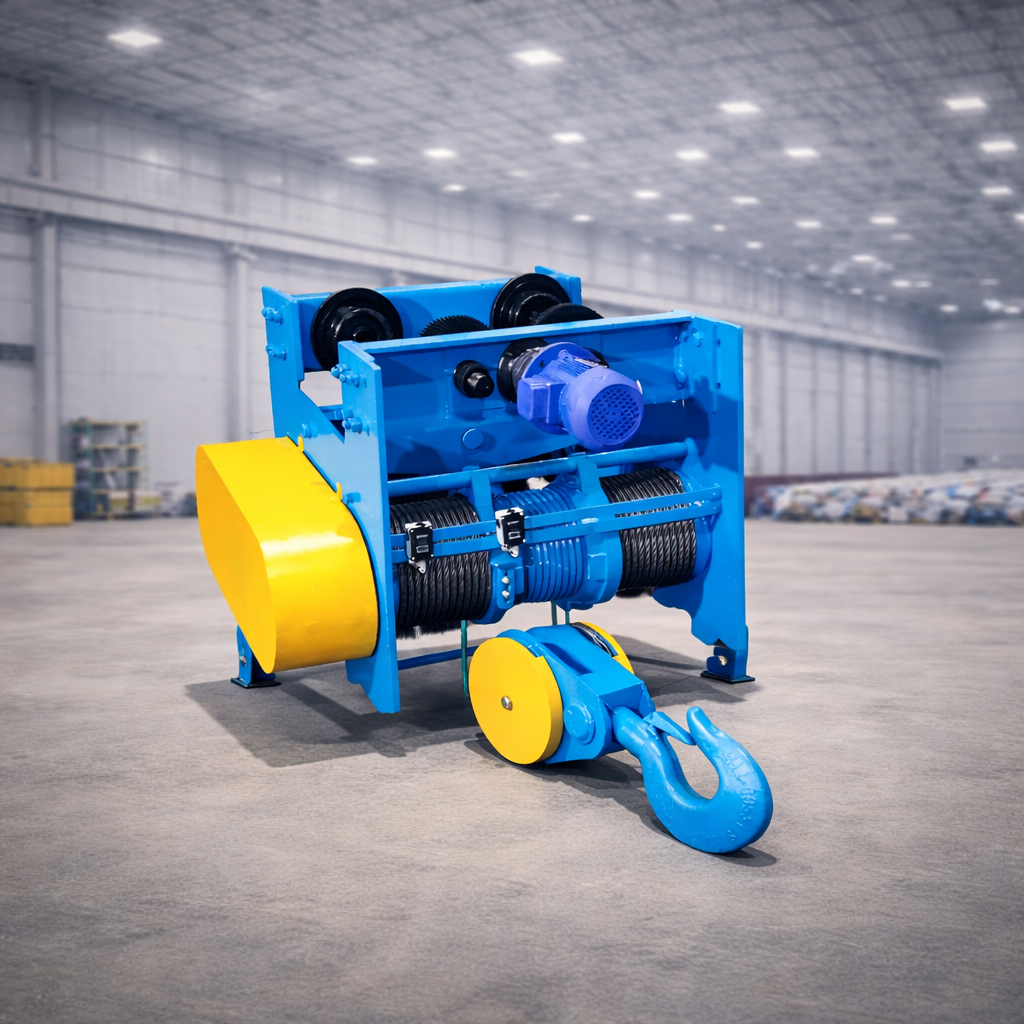
electric wire rope hoist
electric wire rope hoist
Expert electric wire rope hoist manufacturer in Ahmedabad. Hindustan Cranes offers reliable, efficient, and safe lifting solutions for your industrial needs.
What is an Electric Wire Rope Hoist? — Overview
An electric wire rope hoist is a type of industrial crane mechanism designed for lifting and lowering heavy loads using a motor-driven drum around which a wire rope is wound. The electric motor powers a gearbox, which in turn rotates the drum, either winding or unwinding the rope to raise or lower the attached load. These hoists are typically suspended from an overhead crane runway or a fixed structure, allowing for vertical and sometimes horizontal movement of the load.
They are engineered for durability and heavy-duty applications, featuring robust construction to withstand continuous operation in challenging industrial settings. Key components include the electric motor, brake system, gearbox, drum, wire rope, hook, and control system. The control system, often a pendant or radio remote, allows operators to precisely manage the lifting and lowering operations.
Key Features and Technical Specifications
When evaluating electric wire rope hoists, specific technical attributes are crucial for matching the equipment to the intended application. Hindustan Cranes & Hoist Co. focuses on delivering hoists with the following essential features:
- Robust Motor: High-efficiency, duty-rated electric motors designed for continuous operation and reliable torque.
- Heavy-Duty Gearbox: Precision-engineered, sealed gearboxes for smooth power transmission and extended service life.
- High-Tensile Wire Rope: Sourced from reputable manufacturers, ensuring superior strength, flexibility, and resistance to wear.
- Fail-Safe Braking System: Multiple braking mechanisms, including electromagnetic and mechanical brakes, for secure load holding and emergency stops.
- Durable Drum and Structure: Constructed from high-grade steel to withstand significant stress and operational cycles.
- Advanced Control Systems: Options for pendant controls, radio remote controls, or PLC integration for enhanced operational flexibility and safety.
- Overload Protection: Integrated safety features to prevent lifting loads exceeding the hoist's rated capacity.
- Limit Switches: Upper and lower limit switches to prevent over-hoisting and over-lowering, safeguarding the equipment and load.
Industrial Applications and Use Cases
Electric wire rope hoists are versatile machines, finding indispensable applications across a wide spectrum of industries. Their adaptability makes them a cornerstone of modern industrial operations:
- Manufacturing Plants: Lifting heavy components, machinery parts, and finished goods on assembly lines or within production bays.
- Warehousing and Logistics: Loading and unloading trucks, moving palletized goods, and managing inventory in large distribution centers.
- Foundries and Metalworking: Handling molten metal ladles, large metal billets, and heavy fabricated structures.
- Automotive Industry: Assembling vehicle chassis, moving engines, and managing parts in production facilities.
- Power Generation: Installing and maintaining heavy turbines, generators, and other critical equipment in power plants.
- Shipyards and Ports: Loading and unloading cargo from vessels, fabricating large ship components, and moving heavy equipment.
- Construction Sites: Lifting building materials, pre-fabricated sections, and heavy machinery to elevated levels.
- Mining Operations: Moving ore, equipment, and materials within shafts and processing facilities.
How to Choose the Right Electric Wire Rope Hoist
Selecting the appropriate electric wire rope hoist is critical for operational efficiency and safety. Consider these factors when making your choice:
- Load Capacity: Determine the maximum weight the hoist needs to lift, including the load itself and any lifting accessories.
- Lifting Height (Headroom): Measure the required vertical lifting distance, considering the available space above the lifting area.
- Duty Cycle: Assess how frequently and for how long the hoist will be used. This dictates the motor and component durability required.
- Environment: Consider operating conditions such as temperature, humidity, dust, corrosive elements, and hazardous atmospheres.
- Power Supply: Ensure compatibility with the available electrical power source.
- Control Method: Decide between pendant control, radio remote control, or a more integrated system based on operational needs.
- Safety Features: Verify the presence of essential safety mechanisms like overload protection, limit switches, and emergency stops.
- Manufacturer Reputation and Support: Choose a supplier with a proven track record, strong technical expertise, and reliable after-sales service.
Quality Standards and Compliance
For any industrial lifting equipment, adherence to stringent quality standards and regulatory compliance is non-negotiable. Reputable manufacturers like Hindustan Cranes & Hoist Co. ensure their electric wire rope hoists meet or exceed industry benchmarks. Key standards to look for include those set by the Bureau of Indian Standards (BIS) and international bodies like ISO.
Compliance with standards such as IS 3177 (for cranes and hoists) and IS 4137 (for electric overhead travelling cranes) ensures that the equipment is designed and manufactured with safety and reliability as primary considerations. Buyers should always inquire about the certifications and compliance documentation provided by the manufacturer. Verifying that the hoist has undergone rigorous testing and meets all relevant safety regulations is crucial for preventing accidents and ensuring long-term operational integrity.
Why Hindustan Cranes & Hoist Co. Experience Matters
With over 15 years of dedicated experience in designing and manufacturing industrial lifting solutions, Hindustan Cranes & Hoist Co. brings a wealth of practical knowledge and engineering expertise to every project. Our deep understanding of the challenges faced by industries in Ahmedabad and beyond allows us to engineer hoists that are not just functional but also exceptionally reliable and efficient.
Our manufacturing process emphasizes precision engineering, utilizing high-quality materials and advanced fabrication techniques. We maintain stringent quality control measures at every stage, from component selection to final assembly and testing. This commitment ensures that each electric wire rope hoist leaving our facility is built to perform under demanding conditions. Our team comprises experienced engineers and technicians who are adept at understanding specific client requirements and developing customized solutions. This capability, combined with our focus on robust after-sales support and timely delivery, makes us a trusted partner for your material handling needs.
Installation, Maintenance, and Care Tips
Proper installation, regular maintenance, and diligent care are essential for maximizing the lifespan and performance of your electric wire rope hoist.
Installation
Ensure installation is carried out by qualified technicians. The hoist must be securely mounted to its designated support structure, and all electrical connections must be made according to specifications and local electrical codes. Proper alignment of the hoist with the crane or runway is critical for smooth operation.
Routine Maintenance:
- Daily Checks: Visually inspect the wire rope for any signs of damage, kinks, or fraying. Check the hook, latch, and suspension for wear. Test the brake system and limit switches.
- Weekly Checks: Lubricate moving parts as per the manufacturer's recommendations. Inspect electrical connections and controls for any loose wiring.
- Monthly Checks: Examine the wire rope for wear and proper spooling on the drum. Check the gearbox oil level and condition. Inspect the brake linings for wear.
- Annual Overhaul: A comprehensive inspection and servicing by a qualified technician should be performed annually. This includes detailed checks of all critical components, lubrication, and any necessary adjustments or replacements.
Care Tips
- Avoid Overloading: Never exceed the rated capacity of the hoist.
- Cleanliness: Keep the hoist clean and free from excessive dust, dirt, or corrosive substances.
- Proper Operation: Operate the hoist smoothly, avoiding sudden starts, stops, or jerky movements.
- Environmental Protection: If used outdoors, ensure appropriate weather protection is in place.
- Record Keeping: Maintain a logbook of all inspections, maintenance activities, and repairs.
Frequently Asked Questions
The lifespan of an electric wire rope hoist can vary significantly based on its design, the quality of components used, the intensity of its duty cycle, and the diligence of its maintenance. Generally, a well-maintained hoist operating within its specified duty cycle can last anywhere from 10 to 20 years or even longer. Regular inspections and adherence to maintenance schedules are key to achieving this longevity.
To determine the correct lifting capacity, you must first identify the heaviest item you anticipate lifting. Then, add the weight of any lifting accessories you will use, such as slings, spreader bars, or lifting beams. It is always advisable to select a hoist with a capacity slightly higher than your maximum calculated load to provide a safety margin and accommodate unforeseen needs.
Essential safety features include overload protection devices that prevent lifting beyond the rated capacity, upper and lower limit switches to stop the hoist at safe travel limits, a reliable braking system that holds the load securely, and an emergency stop button for immediate shutdown. A secure hook latch is also crucial to prevent accidental load slippage.
Yes, electric wire rope hoists can be designed for outdoor use, but they require specific modifications and protective measures. This typically includes weatherproofing of electrical components, corrosion-resistant coatings, and protection against dust and moisture. It's important to specify outdoor use to the manufacturer to ensure the hoist is appropriately configured for environmental exposure.
A pendant control is a wired control box that hangs from the hoist, allowing the operator to control its movements from a close proximity. A radio remote control offers wireless operation, giving the operator more freedom of movement and allowing them to control the hoist from a greater distance, which can enhance safety and efficiency in certain applications.
Wire ropes should be inspected daily for visible signs of damage such as kinks, broken wires, or corrosion. A more thorough inspection should be conducted periodically by a qualified person. Replacement is necessary when the rope shows significant wear, such as a specified number of broken wires within a given length, significant diameter reduction, or signs of severe corrosion or deformation.
Conclusion
For industries in Ahmedabad and the wider Gujarat region, investing in a high-quality electric wire rope hoist from a reputable manufacturer like Hindustan Cranes & Hoist Co. is a strategic decision that enhances operational efficiency, ensures workplace safety, and supports long-term industrial growth. Understanding the technical specifications, application requirements, and the importance of quality standards is key to making an informed choice. Our commitment to engineering excellence, combined with extensive experience and dedicated customer support, ensures that we provide reliable lifting solutions tailored to meet the unique demands of your business.
Get In Touch
Hindustan Cranes & Hoist Co